Catching the Invisible – Designing with Wind
Design thinking workshop designed for PMQ Seed 2025 “Feel the wind”.
Official website: https://pmqseed.org.hk/en/programme/creative-training-class-p5-6/
"Catching the Invisible – Designing with Wind" is an immersive, hands-on Design Thinking workshop series tailored for Primary 5 and 6 students. Building upon the core theme of "wind," this upper-level course challenges students to explore the relationship between nature, science, and human experience. While the foundational program focuses on sensory awareness and wearable devices, this specialized curriculum empowers older students to transition from sensingwind to manipulating and engineering it.
Through a 3-part structured progression, students visualize the invisible, harness pneumatic energy, and build complex, modular systems. The journey culminates in a collaborative creation phase and a parent-facing showcase, deepening learning outcomes through reflection and storytelling.
The 3-Stage Design Journey
Students move through three distinct, themed modules designed to build their creative confidence and technical understanding:
[Phase 1: Fly the Monster] ➔ [Phase 2: Wind Blaster] ➔ [Phase 3: The Wind Factory]
 (Visualizing Wind)                      (Harnessing Wind)                (System Integration)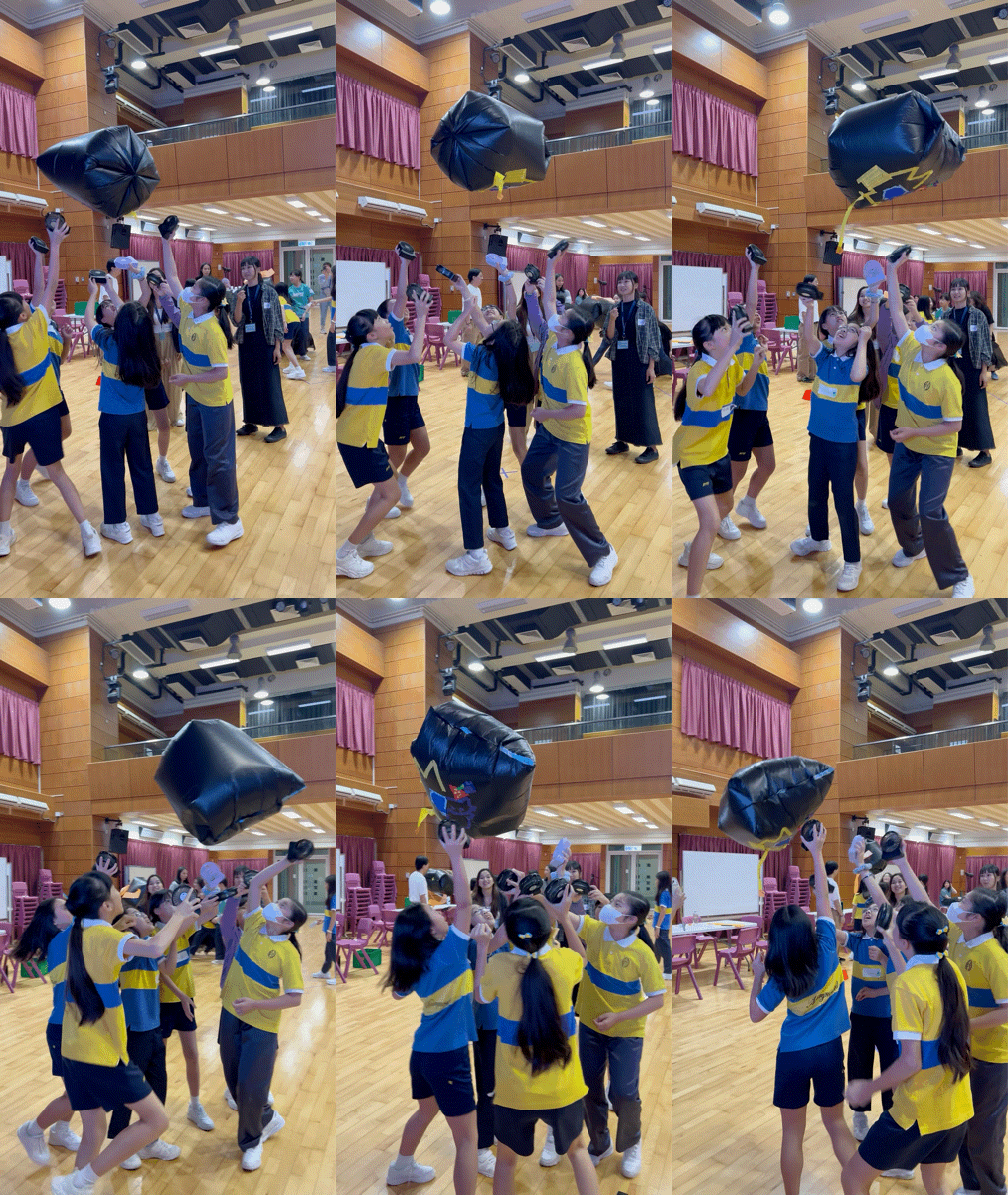
"Fly the Monster"
– Visualizing the Formless”
The Challenge: Each student group designs and constructs a unique "monster" using a large plastic bag. After filling the bag with trapped wind, the team must use hand-held fans to maneuver their floating monster through the air to complete specific missions.
Design Objective: To make the invisible visible. Students explore fluid dynamics, volume, and aerodynamics, learning how wind takes shape and interacts with different forms.
"Wind Blaster"
– Harnessing Media & Precision
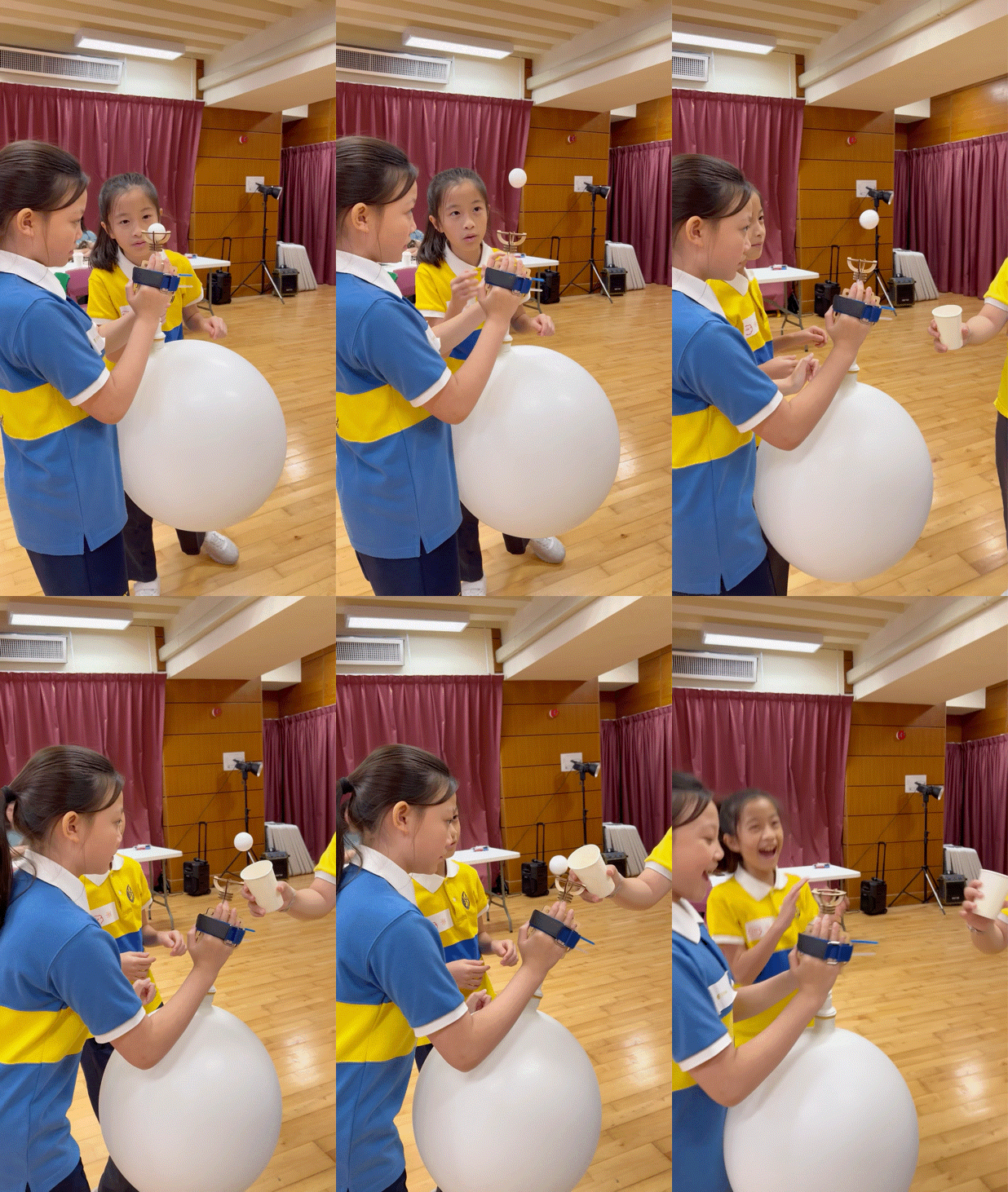
The Challenge: Students engineer a wearable "balloon glove" capable of blasting controlled streams of air. The goal is to keep a lightweight foam ball levitating in mid-air and safely guide it along a designated path to a destination.
Design Objective: Moving from observation to application. Students explore the balloon as a medium for storing and producing wind, practicing fine motor control, pressure regulation, and spatial problem-solving.
"The Wind Factory"
– Modular Systems & Expression
The Challenge: Acting as chief engineers, students work with a modular pneumatic kit to build a themed, interconnected "Wind Factory." Using PU piping, connectors, and various inputs/outputs, they must create a complete wind circuit.
Wind Input: Air pumps and balloons.
Wind Connection: A network of custom-shaped connecting joints and pipes.
Wind Output: Interacting elements that translate wind into other sensory forms, such as musical instruments (sound), windmills (motion), or floating foam balls (visuals).
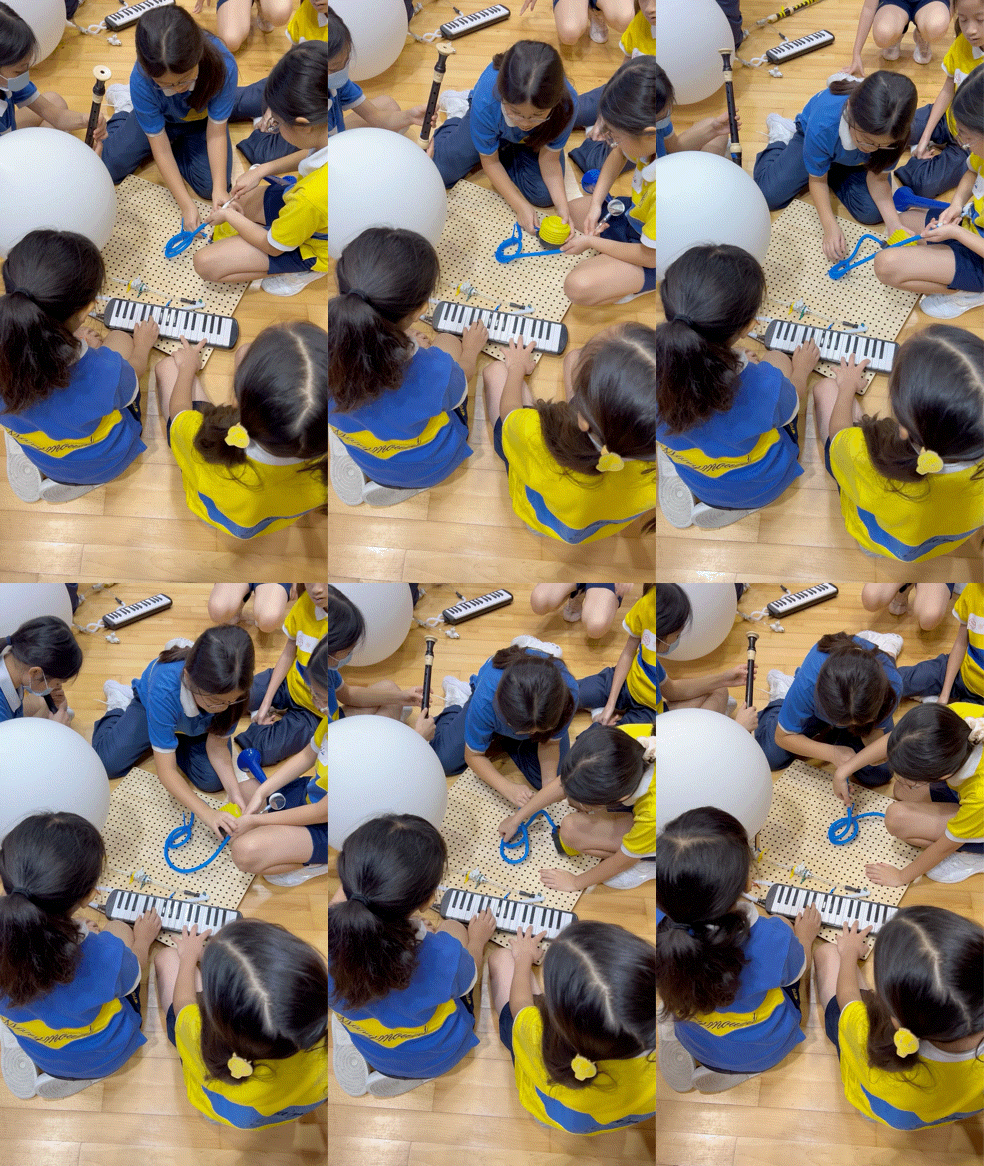
Design Objective: Systems thinking and creative expression. Students learn how energy transfers through a circuit and collaborate to turn a raw natural element into an interactive, sensory experience.